
Europe Reviews the State of Renewable Synthetic Fuels
The European Commission’s Joint Research Centre published its 2025 status report on renewable fuels of non-biological origin on January 14, 2026.
The report examines technology development, value chains, markets and policy support for renewable hydrogen and synthetic fuels produced from hydrogen combined with captured carbon dioxide or nitrogen.
The JRC positions these fuels as potential options for sectors where direct electrification is technically difficult, particularly transport and selected industrial applications.
Under the European framework, qualifying RFNBO pathways are required to deliver substantial lifecycle greenhouse-gas reductions compared with their fossil equivalents.
The report concludes that renewable synthetic fuels are progressing technologically, but the sector remains at an early stage of industrial deployment.
Several Pathways Are Moving Beyond Demonstration
E-methanol, e-kerosene, e-ammonia and e-methane are among the renewable synthetic fuel pathways showing the strongest progress toward commercial deployment.
The JRC places these technologies broadly at Technology Readiness Levels between 6 and 8.
That range means technologies have moved beyond laboratory development and, in some cases, are being demonstrated or operated in relevant industrial environments.
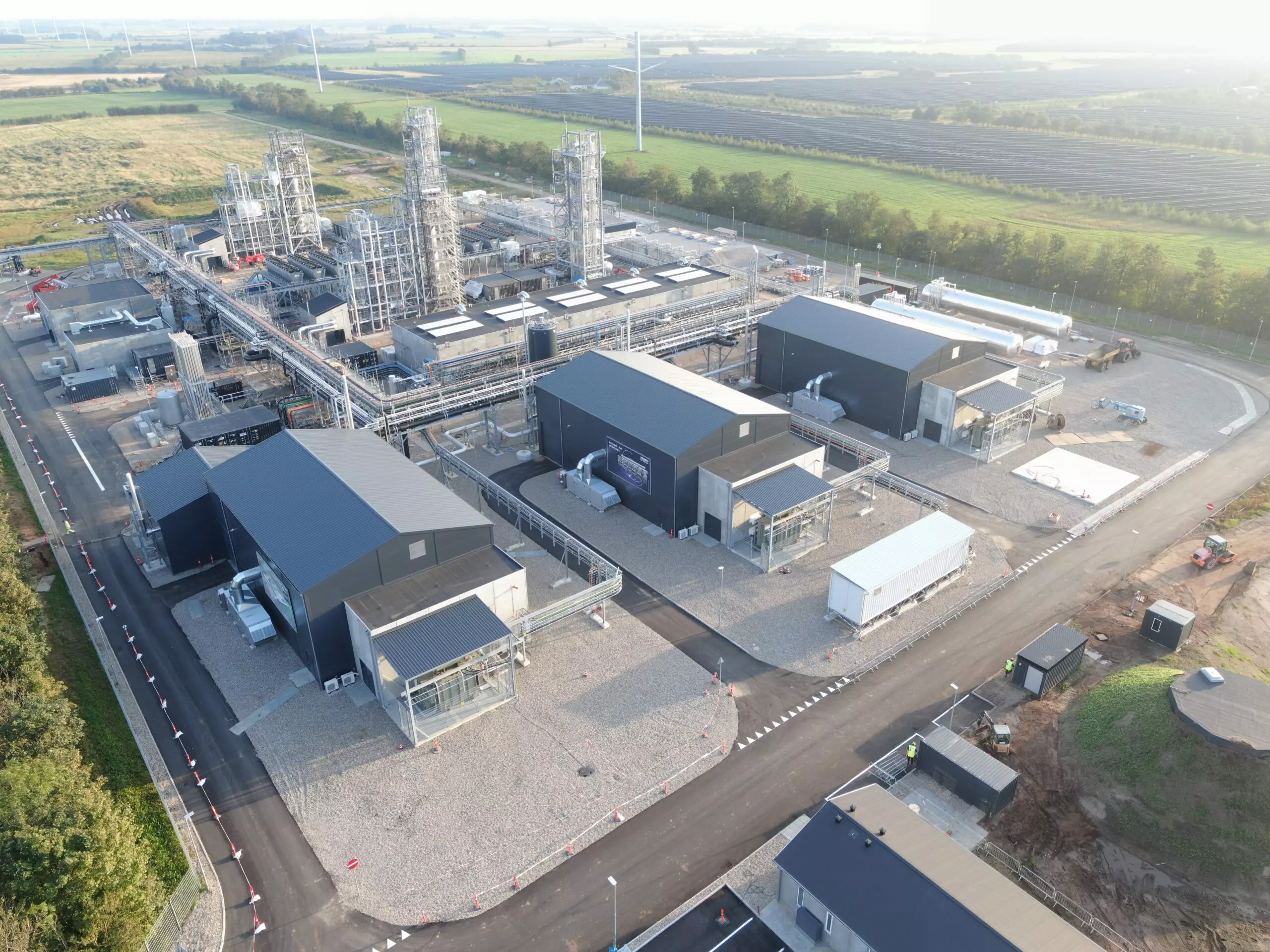
Early commercial projects are already operating in Germany and Denmark, giving developers practical experience with integrated renewable hydrogen and synthetic fuel production.
The progress is significant because the challenge is no longer limited to proving individual chemical conversion processes.
Developers increasingly need to demonstrate that renewable electricity, electrolysis, carbon or nitrogen supply, synthesis and downstream fuel handling can operate reliably as an integrated commercial system.
Hydrogen Supply and Cost Remain the Main Constraints
Despite technological progress, renewable synthetic fuels remain significantly constrained by the availability and cost of their core inputs.
The JRC identifies limited renewable hydrogen supply as one of the main barriers to wider deployment.
Carbon capture technologies also remain insufficiently developed for the scale of carbon utilisation that future synthetic fuel production could require.
At the same time, high capital expenditure and operating costs continue to make many RFNBO pathways less competitive than conventional fossil fuels.
European policy is attempting to address that investment gap through measures including the Renewable Energy Directive, ReFuelEU Aviation, FuelEU Maritime and the Net-Zero Industry Act.
The JRC argues that Europe retains a strong position in research, innovation and demonstration activity, supported by a growing range of public funding and market-development mechanisms.
The next stage for renewable synthetic fuels will therefore depend on moving from technically successful demonstration projects toward larger plants capable of producing fuel reliably and competitively.
For the sector, the central question is increasingly commercial rather than scientific: whether enough renewable hydrogen, financing and industrial infrastructure can be brought together to turn promising technology into a large-scale fuel market.
Sources
European Commission Joint Research Centre — Clean Energy Technology Observatory: Renewable Fuels of Non-Biological Origin in the European Union — 2025 Status Report, January 14, 2026